
SMART Lab
x
Crans-Montana 2027
Showcase your innovation at a major international sporting event
What if your solution were tested at a major sporting event?
SMART Lab is a call for projects that transforms major sporting events into testing grounds for innovation.
For this edition, SMART Lab is partnering with the 2027 FIS Alpine World Ski Championships in Crans-Montana to identify and test innovative solutions capable of enhancing the spectator experience, supporting organizers, and contributing to the sporting events of the future.
Within the SMART Confluence ecosystem, selected projects benefit from exclusive access to a real-world testing environment, a network of experts, and support designed to accelerate their development.
Turn your concept into action. Test, validate, and showcase your innovation at the heart of Crans-Montana 2027.
The Challenges Ahead
For this edition, SMART Lab is seeking solutions capable of addressing specific needs identified in conjunction with Crans-Montana 2027.
Projects may fall under two main themes:
1. Reinventing the fan experience
Reinventing the fan experience by offering more engaging, personalized, and immersive experiences.
2. Optimize the Organization
of the event
Optimize event organization by developing tools and services that make it easier for organizers to plan, manage operations, and make decisions.
Fan experience
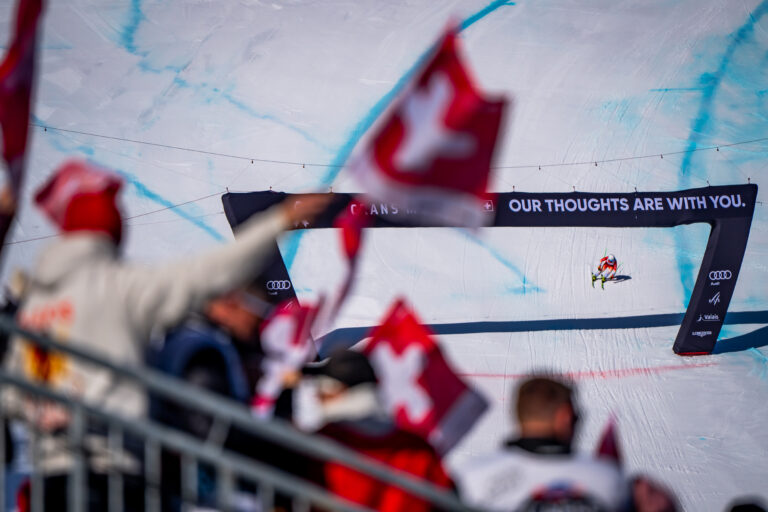
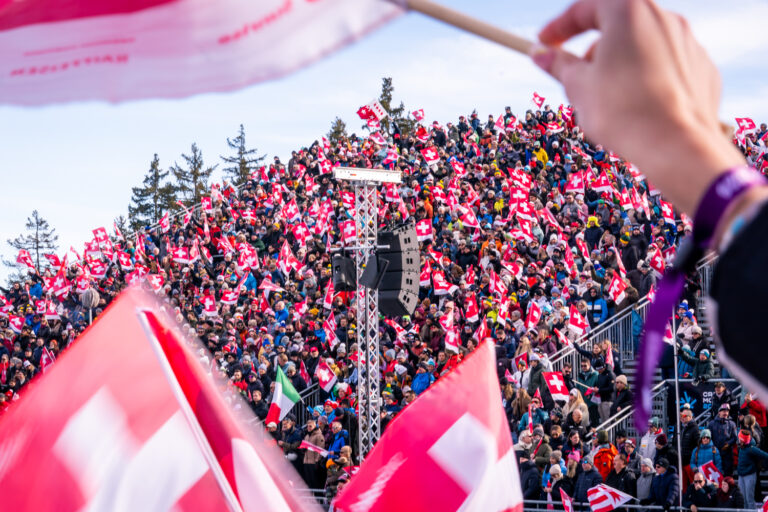
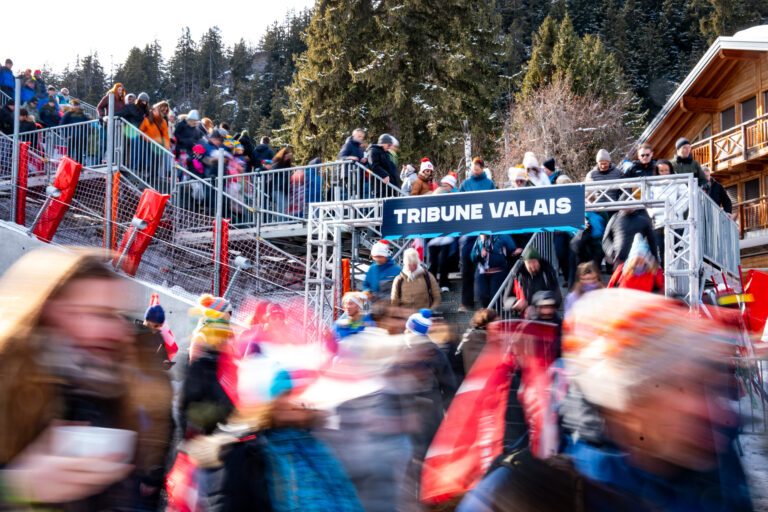
A major sporting event is about much more than just the competition. It begins the moment spectators arrive on site and continues through access to information, the atmosphere, wayfinding, accessibility, and the way each spectator can experience the event according to their own expectations.
SMART Lab is seeking solutions that make this experience more seamless, inclusive, immersive, and personalized.
Real-time information
How can we help visitors access the right information at the right time, without any friction?
The solutions we’re looking for can make it easier to find your way around the venue, guide spectators through their experience, share practical information, notify visitors of changes in real time, or allow organizers to adapt content as the event unfolds. The goal is to make the experience simpler, smoother, and more responsive—for fans and on-site staff alike.
Accessibility
How can we enable everyone to fully experience the excitement of a live competition?
This theme focuses on solutions that enhance the experience for people who are deaf or hard of hearing, as well as the overall accessibility of the event. Translation, adapted signage, visual alerts, assistive devices, inclusive content, and new interfaces can all help make the event more open, more understandable, and more emotionally accessible to everyone.
Personalized Experience:
How can we offer each viewer an experience that matches their interests, needs, and the way they follow the competition?
Solutions can draw on data, artificial intelligence, sports statistics, interactive content, or user preferences to enhance the fan experience. The goal is to enable everyone to follow the event with the information, perspectives, content, or recommendations that are most relevant to them.


Organization
Behind every international sporting event lies a complex organizational effort that is often invisible to the public: energy, logistics, equipment, coordination, on-site constraints, and sustainability.
SMART Lab seeks practical solutions to help organizers improve their efficiency, control, and positive impact.
Energy
How can we better understand, manage, and optimize the energy needs of a sporting event?
The solutions we’re seeking can help measure energy consumption, identify the areas that use the most energy, anticipate needs, and optimize resource use in real time. The goal is to help create a more efficient, better-managed, and more sustainable event, without compromising the quality of the experience or operational requirements.
Sustainable transportation
How can we transport equipment in the mountains more efficiently and in a more environmentally friendly way?
This topic focuses on solutions capable of reinventing the transport of heavy loads in an alpine setting. Technical equipment, temporary facilities, infrastructure, and event resources must be able to be moved in a reliable and sustainable manner that is adapted to the constraints of the terrain. The goal is to reduce the logistical impact while improving operational efficiency.
Equipment
How can you tell where each piece of equipment is located, what condition it’s in, and when it’s available?
The solutions sought can improve inventory management, traceability, location tracking, storage, maintenance, or coordination of equipment. The goal is to enable organizers to better manage their resources, avoid wasted time, anticipate needs, and streamline the work of teams before, during, and after the event.
Practical Information
SMART Lab is aimed at innovators who want to turn their ideas into concrete solutions, contribute to an international sporting event, and leave a lasting impact on the Valais region.
Who can apply?
- Individuals and teams
- Startups
- Companies
- Research institutes
- Nonprofits
- Industrial groups
Where can projects come from?
- From Switzerland
- From abroad
We are looking for concrete, useful, and testable solutions.
Your project can take various forms:
- mobile app;
- digital platform;
- management tool;
- connected device;
- artificial intelligence solution;
- assistive technology;
- accessibility solution;
- tracking or traceability system;
- energy solution;
- logistics solution;
- innovative service;
- hardware prototype;
- immersive or interactive solution;
- real-time communication device.
Priority will be given to projects that clearly address an identified need, can be tested in the field, and provide added value to fans, organizers, or the event as a whole. The solution does not need to be fully finalized, but it must be sufficiently advanced to be tested, adapted, or validated in the field.
- August 20, 2026: Opening of the call for applications
- October 11, 2026: Applications deadline
- October 20, 2026: Interviews of shortlisted applicants (please save the date)
- October 23, 2026: Announcement of nominees
- February 1-14, 2027: Field testing
- Starting in March 2027: Debriefing phase and potential support for projects
Projects will be evaluated based on the following criteria, among others:
- their alignment with the themes of the call for proposals;
- their innovative nature;
- their added value for fans, organizers, or the event;
- their feasibility under real-world conditions;
- their level of maturity;
- their potential impact;
- the team’s ability to carry out the experiment.
From Application to Testing
1. Application
Through October 11, 2026
Project proposers must submit their applications online by the deadline. They must describe their solution, the target area, the project’s level of maturity, and the requirements for the pilot program.
2. validation
October 20, 2026
The most promising projects are then shortlisted by the jury and invited to a confirmation interview on that date.
3. selection
October 23, 2026
The selected projects are officially announced. The chosen teams join the SMART Lab and move on to the next steps in preparation for their pilot phase.
4. Preparation
The selected teams are working with the organizers to adapt their solutions to on-site constraints and create optimal conditions for testing.
5. field testing
February 1–14, 2027
The selected solutions will be tested under real-world conditions during Crans-Montana 2027.
6. Acceleration
After the pilot, a feedback session is held with the organizers to share insights from the field, draw key lessons, and discuss the next steps for development.
Why participate?
Participating in SMART Lab means benefiting from:
- A real-world testing ground in the heart of Crans-Montana 2027
- Real-world testing with users and industry stakeholders
- Concrete feedback to improve and validate your solution
- Enhanced visibility through a major sporting event
- Access to the SMART Confluence ecosystem and its network of partners
- Opportunities to engage with experts in sports, innovation, and technology
- An opportunity to demonstrate the value of your project in a challenging environment
- Support to transform a prototype or solution under development into a concrete pilot project
FAQ
Does my project have to be solely related to skiing?
No. The solutions sought may relate to sports in the broadest sense, the fan experience, accessibility, event management, logistics, energy, data, artificial intelligence, or technologies useful for organizing a sporting event.
Does my solution need to be finalized already?
Not necessarily. However, your solution must be sufficiently advanced to be presented, tested, or adapted in a real-world setting.
Can I apply if my project addresses multiple themes?
Yes. If your solution addresses multiple challenges, you can specify this in your application.
What do the selected projects receive?
Selected projects benefit from a unique testing environment, access to real-world settings, concrete feedback, increased visibility, and support in preparing for and analyzing their pilot projects.
The final benefits will be specified in the official documents for the call for proposals.
Who organizes SMART Lab?
SMART Lab is a program launched SMART Confluence, in partnership with Crans-Montana 2027.
When will the pilot program take place?
The field testing is scheduled for February 1–14, 2027, as part of Crans-Montana 2027.
Your innovation could transform the sports events of tomorrow
Crans-Montana 2027 is more than just a sporting event—it’s a real-world testing ground.
Through SMART Lab, SMART Confluence is seeking concrete, bold, and practical solutions to enhance the fan experience, support organizers, and envision the future of sports.
Do you have an innovation to test? The testing ground awaits you.